Global Tax Identity
Validate TINs, verify entities, and build audit-ready compliance evidence through authoritative sources worldwide — in real time, at the point of onboarding.
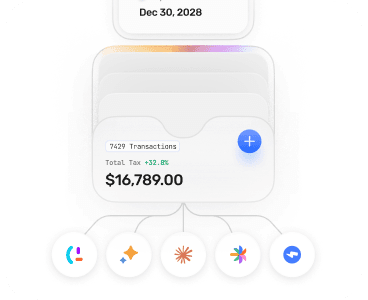
Use one engine or all three, connected at the core: global tax identity verification, indirect tax and Day-1 regulatory compliance.

Validate TINs, verify entities, and build audit-ready compliance evidence through authoritative sources worldwide — in real time, at the point of onboarding.

US Sales Tax, VAT, and GST compliance in one engine — real-time rate calculation, nexus and exposure tracking, registration management, automated filing, and audit advisory.

Automated due diligence, forensic indicia detection, intelligent curing, and regulatory XML reporting — Day-1 readiness from onboarding through submission.
CRS 2.0, DAC8, CARF, DAC7, FATCA
Whether you're a small retail business, a growing SaaS company, a global marketplace or a Tier-1 bank — when it comes to tax identity verification, indirect tax compliance and regulatory reporting, you get the same three engines. You activate only what you need.
Built on a foundation of global data sources, regulatory frameworks, and identity intelligence to support tax operations at scale.
An invalid tax ID never announces itself. It surfaces as a rejected e-invoice, a reverse charge you were not entitled to apply, a payment to a supplier that no longer legally exists, or a due-diligence finding two years after the relationship started. Three services close that gap before it opens — and leave an answer you can put in front of an auditor.
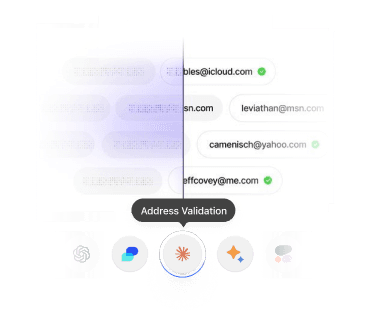
Real-time TIN and VAT number validation against the official government source in 130+ countries — a live lookup at the moment of the check, not a cached list and not a format check that passes anything shaped like a tax ID.
Verify legal name, registration number, legal form, trading status, officers and directors against official company registries worldwide — so a dissolved or misrepresented entity never passes as a trading counterparty.
Tax Identity & Business Assurance. The first tax-native verification built for tax-residency and business-assurance certification: every business behind a Tax ID interrogated across eight areas and 30+ signals, then cured and certified in one verdict.
Registration thresholds are crossed quietly — a US economic nexus test, an EU distance-selling limit, a GST registration trigger. By the time the tax authority notices, the back-period has been accruing tax, penalties and interest for months, and the assessment arrives without warning. This engine calculates the correct tax on every transaction automatically, monitors your exposure as each threshold approaches, and files on time in every jurisdiction where you are registered.
The correct VAT, GST or sales tax rate at the point of transaction — jurisdiction-aware, product-aware, and exemption-aware, down to US local rates.
Monitor economic nexus thresholds across US states and global registration triggers. Alerts before you cross an obligation, not after.
Register, track and maintain indirect tax registrations across jurisdictions — status, renewal dates, filing frequency, and deadlines in one place.
Prepare, validate and file VAT/GST returns and US sales tax returns automatically — multi-jurisdiction, from one dashboard, with submission tracking.
Collect, validate and store resale and exemption certificates — then auto-apply the exemption at the point of sale and flag expiry before it costs you.
Transaction-level evidence and calculation audit trails from day one, plus advisory support when a tax authority opens an inquiry.
Nexus tracking finds the exposure. The platform also closes it. Where a threshold was crossed before you had a system, TaxDo VDA clears the back-period inside the same platform that files everything going forward — so discovery and remediation are not two vendors and two datasets.
Explore VDAA self-certification nobody tested becomes a reporting error, and a reporting error becomes a penalty per account. Collect the self-certification. Test what it claims. Cure what's wrong. File the report — across every major AEOI and tax transparency framework, from the day the account opens.
Account holders answer plain-language questions instead of filling in a form. The system classifies them, validates every answer in real time, pre-populates the self-certification, and captures a legally binding e-signature.
Indicia detection across every framework requirement — TIN signals, address and residency, entity classification, controlling persons, behavioral patterns. Far beyond checkbox compliance.
Tax ID validation, business registry verification and Verify+ assurance run inside due diligence automatically — because Engine 01 is part of the same platform, not a third-party integration you have to buy and wire in.
Self-declared information is cross-referenced against independent authoritative, documentary and institutional signals, then risk-classified on a tiered trust hierarchy.
Discrepancies are resolved through multiple methods — authoritative correction, targeted prompts, document requests, re-classification. 95%+ close without human intervention.
Schema-compliant XML for all five frameworks, per-jurisdiction, with validation, submission tracking, and a complete evidence chain from first interaction through filing.
Secure tax & regulatory notice and document management
The layer all three engines write into. Every notice a tax or regulatory authority sends, every document exchanged in response and every message about it — captured, deadline-tracked and held securely in one record, across tax identity, indirect tax and regulatory compliance. And under VDA.
Voluntary disclosure, 50 US states & 70+ countries
A registration threshold crossed before you had a system — VDA closes the back-period and settles it with the authority, so the engines start from a clean position instead of inheriting a liability.
Which is why a VDA runs on the same layer. Every exposure calculation, draft filing and exchange with the tax authority happens in Vault — secure messaging and document sharing, not email threads — and stays there long after the disclosure closes.